
Field guide · dining and cards

Best 10 Offline Poker Evenings

This is a guide to evenings where a considered restaurant meal and an in-person poker table share a calm room. Think card lounges and card rooms where conversation, shared tables and a host-led pace are as present as the cards themselves.

Offline poker here is a physical restaurant experience: guests arrive, settle over food, make room at the table and let the evening unfold face to face. The useful detail is not urgency, but the feel of the room, the rhythm of the meal and the company gathered around it.

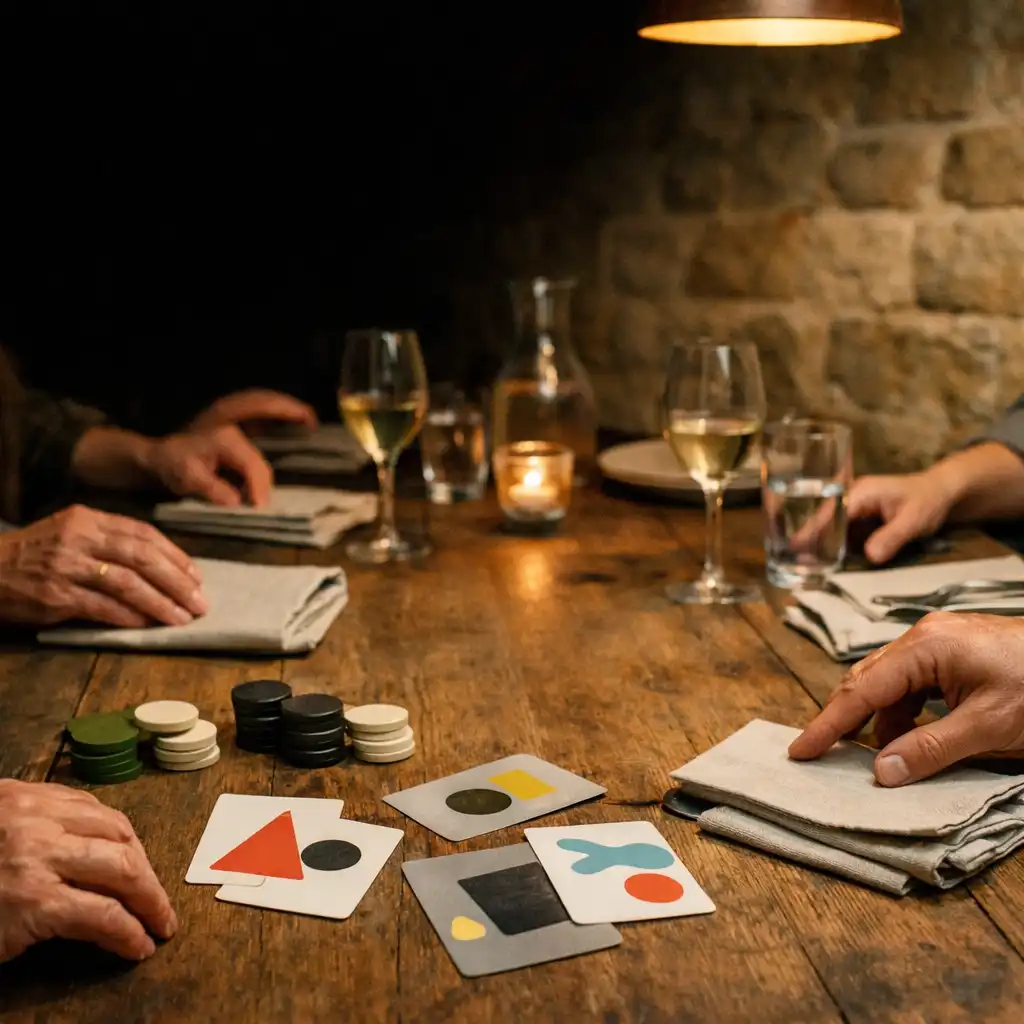
A timber restaurant table prepared with linen napkins, cards and shared dining settings under warm pendant light.
A table set for food, conversation and cards in the same unhurried room.

The field guide

Ten ways the evening can gather

These Best 10 Offline Poker Evenings are editorial formats rather than fixed programmes. Use them to notice pace, seating and meal rhythm in physical card lounges or card rooms, then picture which kind of table would suit the people and occasion you have in mind.

Supper · gentle opening

Early supper table

An early supper table gives the meal time to establish the mood before cards appear. After a first course, a small reset can clear a practical patch of timber and signal that the in-person poker table is ready without interrupting conversation.

This format suits guests who prefer a gentler start. Some may stay close to the meal and talk, while others begin handling the physical cards, with the room allowed to find its own relaxed pace.
Shared table · between courses

Shared plates, steady hands

Shared plates keep an evening sociable because dishes, stories and cards arrive in turns. The table works best when passing food remains easy and enough clear space is kept for a small, physical card arrangement between courses.

Rather than separating dinner from play too sharply, this rhythm lets the cards become another shared tabletop activity. It leaves room for guests to join the conversation first and the table later.

Card room · quieter focus

The quieter card room

A smaller card room offers a more contained note after dinner: the same hospitality, simply with less competing noise around the table. It can appeal to a group that values listening, close conversation and a clearer view of the cards in hand.

A brief piece of host guidance is a useful cue here. It helps everyone settle into the room without turning the occasion into a performance, and keeps the in-person setting welcoming for observers as well as players.

Host-led · table preparation

A host-set first hand

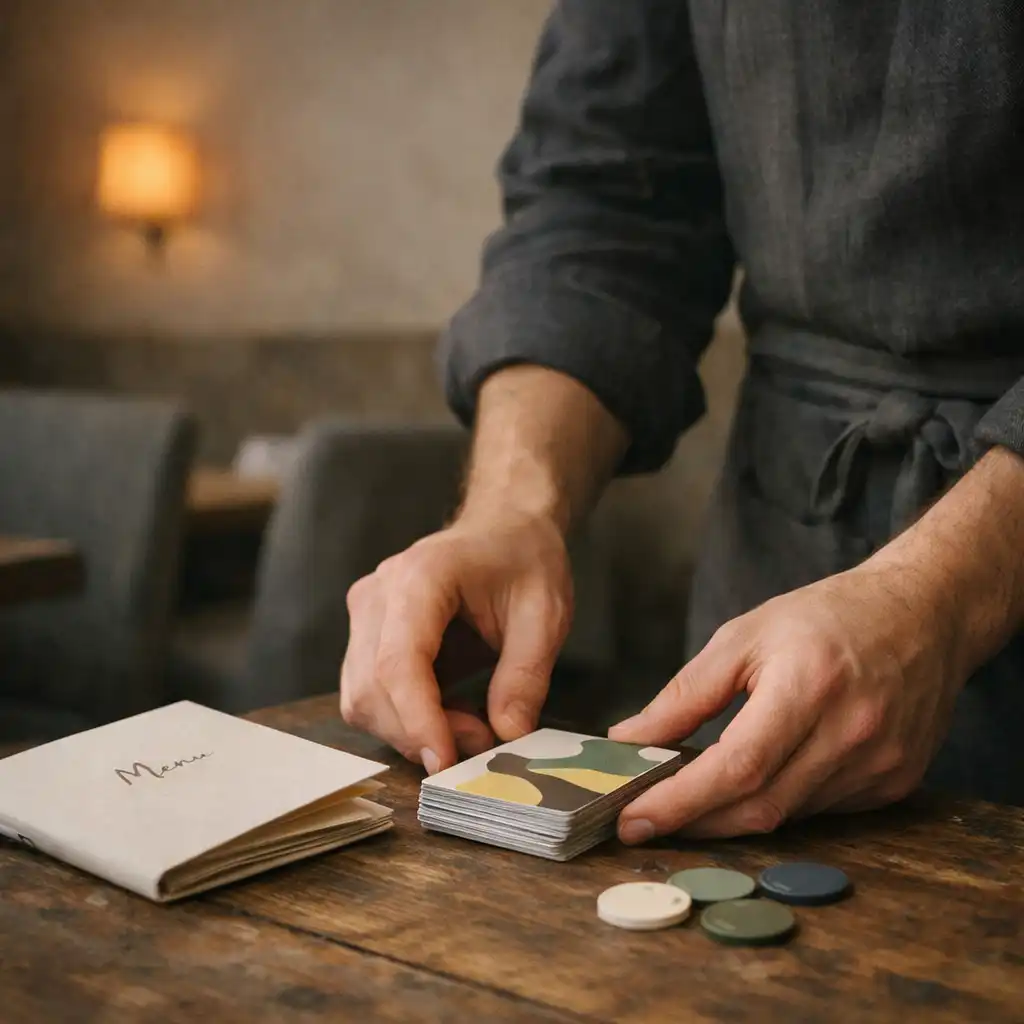
A restaurant host's hands setting abstract cards, a folded menu and small non-financial table pieces on a timber table.
Preparation makes the table feel ready, not staged.

A host-set table begins with quiet preparation: cards placed within reach, menus folded aside and a few non-financial table pieces kept simple. That small act of organisation gives guests permission to arrive as they are and understand the evening’s rhythm before they settle in.

For a mixed table, clear hosting can make participation feel easy. The meal remains visible, the table stays tactile and no one needs to rush to find their place in the conversation.

Seasonal menu · measured pauses

Seasonal courses and table pauses

A seasonal menu can give the room its natural punctuation.

When courses arrive in a measured sequence, conversation and cards have room to breathe between them. A physical restaurant meal remains the centre of the evening, while the table changes character gently as plates are shared and cleared.

This is a useful rhythm for guests who enjoy noticing the season in their dining choices. The cards wait beside the setting until there is a natural pause, rather than competing with the meal.

Long table · inclusive rhythm

Long-table conversation

A long table can suit a private gathering as a planning idea, especially when dinner, story-sharing and cards are all part of the same occasion. A rotating seat at the cards lets the group keep talking across the table rather than splitting into separate activities.

Clear turn-taking matters more than formality. It leaves room for people who would rather dine, watch or join later, and gives the host a calm way to hold the group’s shared pace.

A generous table has room for a pause, a plate and the next voice.

Card lounge · soft finish

Dessert in the card lounge

A card lounge can carry an evening towards a late-but-low-key finish. Dessert, tea and a final round of physical cards offer a gentle closing rhythm, especially for guests who prefer considered hospitality over a heightened room.

The mood is not about extending the night for its own sake. It is about allowing a well-set table to settle, with a last conversation and a final shared moment before everyone leaves the room.

Dining first · after-dinner layer

The meal-first evening

For some groups, the restaurant experience should remain clearly the main event. In that case, an offline poker session can sit lightly after dinner as a shared layer rather than a competing focus.

The contrast is simple: food, room and company lead; cards add a tactile reason to linger. There is no need to assume a fixed format when the table can respond to the people gathered around it.

Gathering · shared table

A considered gathering

A small celebration can use a physical poker table as one thoughtful activity alongside hosted dining. A considered guest mix helps: people who enjoy conversation, shared plates and the possibility of taking a turn without needing the whole room to move at once.

Private gatherings work best as an intention, not an assumption about a particular arrangement. The useful question is whether the group will enjoy a relaxed table tone with enough attention for one another.

“The best table is one where everyone has a way in.”

Classic close · enduring rituals

The classic table close

A classic close suits guests drawn to the small rituals of an unhurried card table: the deck returning to its place, a last story travelling around the room and the meal’s conversation continuing at an easy volume. Best 10 Classic Card Games belong here as tactile tabletop culture, not as the sole purpose of the gathering.

When cards remain part of the room’s culture, a final hand can feel like a natural close to dinner. When you have found a mood that fits, plan a visit with that pace in mind.

Practical reading

What gives the evening its rhythm

The strongest offline poker sessions feel paced around hospitality: arrival, meal, a modest table reset and conversation. Food and the room’s own cadence matter more than competition. If you are beginning to organise an evening, look for the small signals that let people settle into the shared setting.

Room

Read the room

Top 10 Card Lounge Details are often quiet ones: seating that lets guests face one another, workable light, a clear table edge and a recognisable host presence. In a card lounge or card room, treat these as comfort cues rather than a checklist. They help conversation remain easy around the physical table.

Table

Let the meal lead

Seasonal menu choices can create natural pauses for talking, sharing and setting cards aside. Keep enough table space for plates and glasses first, then let cards occupy the clear area between courses. The meal remains central, and the table is less likely to feel crowded or hurried.

Company

Keep the table welcoming

A small host introduction can organise the tone without overexplaining it. In-person participation is easier when people understand they may dine, observe, take turns or simply talk. Considerate turn-taking gives a mixed group room to find its own conversation and stay connected to the table.

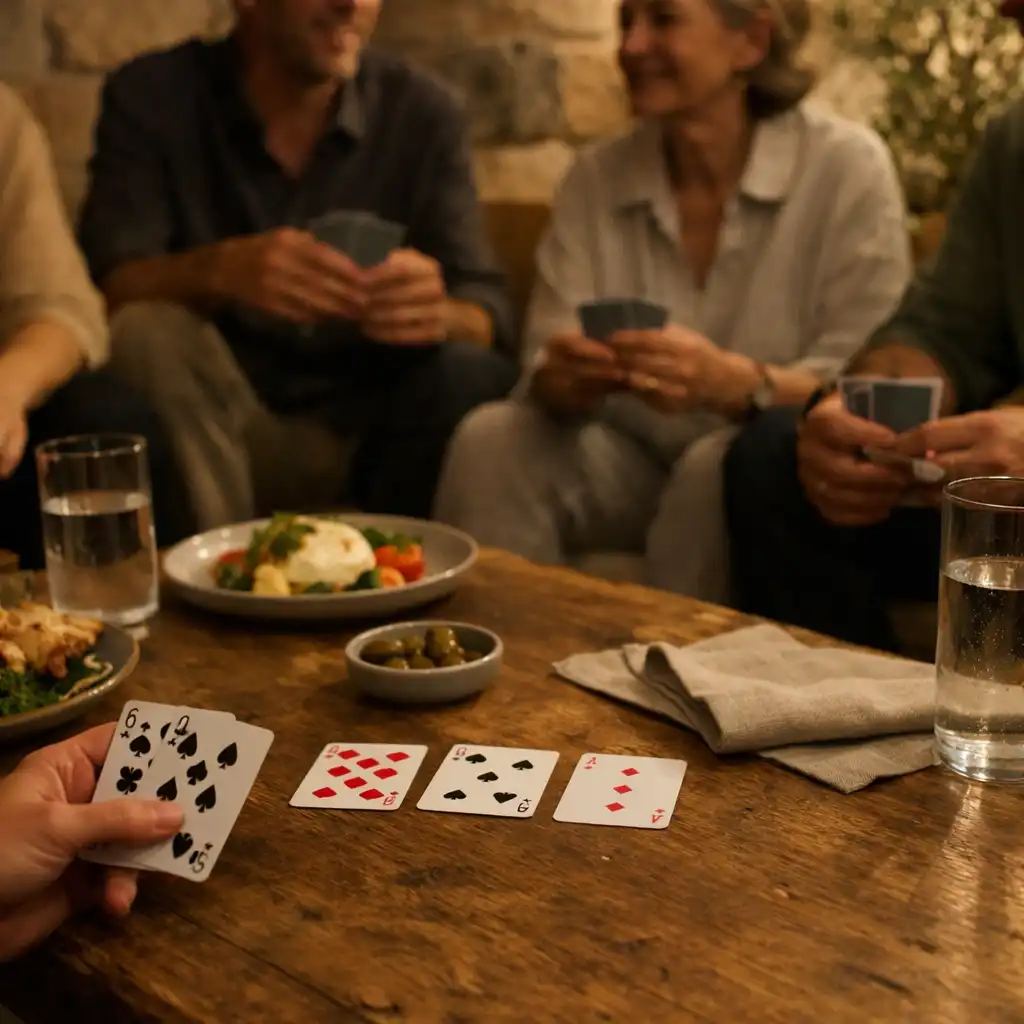
Shared seasonal plates, water glasses and cards on a low timber table in a softly lit restaurant card lounge.
Shared plates keep the social centre of the table in view.

For a table of friends

An offline poker evening can be approached as a shared dining occasion, whether some guests play and others stay close to the meal and conversation. Considerate seating, room to pass plates and an unforced pace help everyone remain part of the same evening.

For a private gathering, it is useful to picture the group before the setting: who wants a long dinner, who enjoys a card lounge atmosphere and who may prefer simply to observe. The aim is not to prescribe an arrangement, but to choose a mood that lets the table stay comfortable.

A good gathering leaves space for food, stories and the people who join in differently.

Three things to consider

  • How long does your group hope to stay around the table?
  • Would you prefer dining to lead the occasion?
  • Does a card lounge or quieter card room suit the mood?

Made for the room, not the screen

These notes are for experiences shared in person at restaurant tables, card lounges and card rooms. Cards and non-financial table chips are tactile table pieces within the meal, conversation and company of the room—small details that make the evening feel present and shared.

Table culture

A good table has room for everyone

Considerate in-person table culture is part of a good restaurant evening. These are not formal rules, only useful ways to keep food, conversation and physical cards in balance so that each guest can feel comfortable in the shared setting.

01

Leave room for the meal

Keep cards as tabletop objects with a clear place of their own. Between courses, a little clearing space for food, drinks and hands makes the table feel cared for rather than cluttered.

02

Keep the pace visible

Relaxed turn-taking helps a mixed group follow what is happening. It includes guests who are dining, watching or joining later, without asking anyone to keep up with a rushed table.

03

Listen to the room

A card lounge or card room is still a shared hospitality space. Let conversational volume and attention sit comfortably with the room, so nearby diners and your own table can both feel at ease.

04

Let the evening settle

Treat the gathering as hosted time together rather than a rushed activity. A final course, tea or closing conversation can give the table a gentle way to finish while dining remains at the centre.

Next step

Take the guide to the table

Once you have found an evening style that suits your group, the planning pages can help you organise a visit with the right pace in mind. Use Plan Your Visit for the practical next step, or Contact Us to enquire about a question raised by this guide.

A final table note

A good evening joins attentive dining, a well-set physical poker table and unhurried company. Whether the room feels more like a card lounge or a quiet restaurant corner, the lasting character is in-person presence: a meal shared carefully, cards handled lightly and conversation allowed to take its time.