
Field guide / restaurant rooms
Card Lounge
A meal, a table, a room to stay awhile
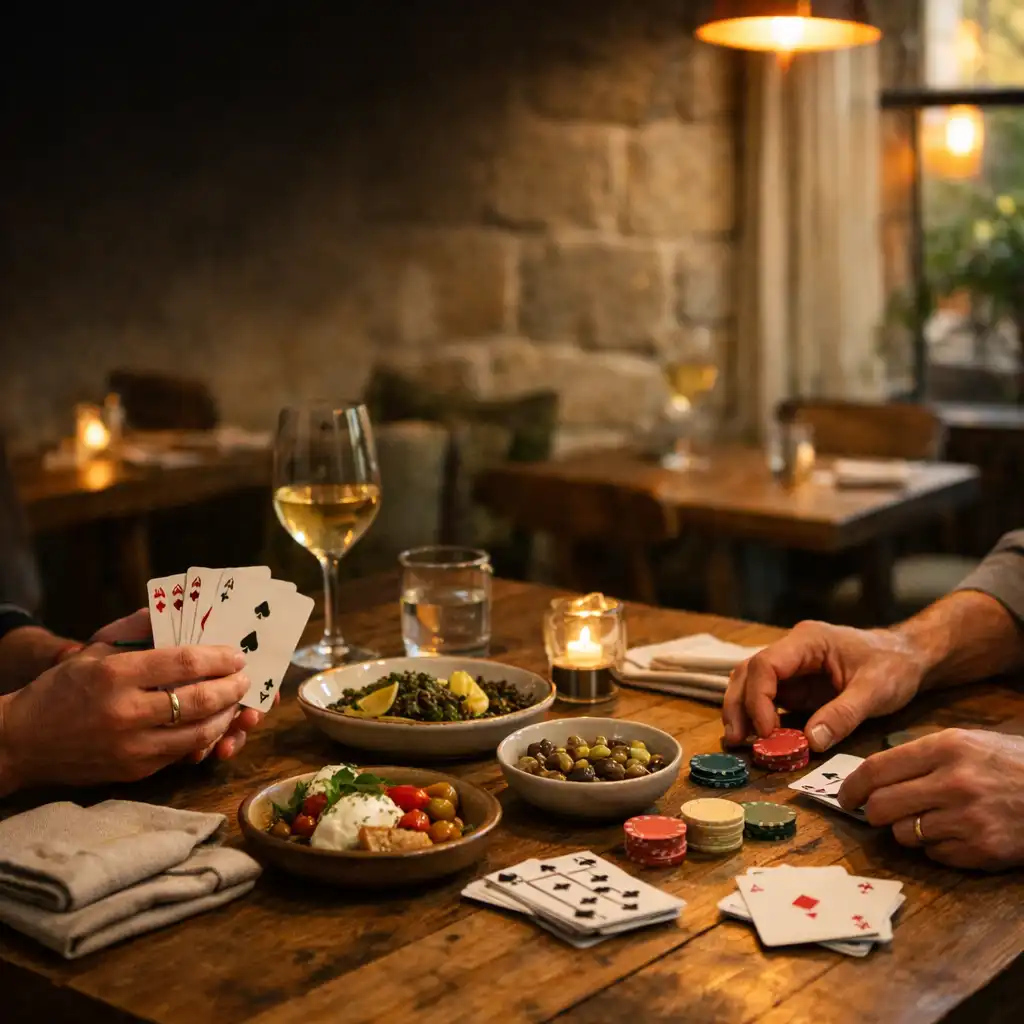
A physical card lounge is a place to settle in for a considered meal, a shared table and cards played in person. Top 10 Options AU looks at restaurant experiences involving card lounges, card rooms and poker tables with the same attention given to a warm room, a well-paced course and the people gathered around it.
What this field guide notices
Begin with Top 10 Card Lounge Details, from table spacing to room tone, then move through observed moments worth noticing in card rooms and around physical poker tables. For a related read, see Best 10 Classic Card Games in our offline poker evenings guide. Jump to the details.
In this guide
Room reading / 01–05
Top 10 Card Lounge Details — the room itself
Before choosing a table, notice how a room lets conversation, meal pacing and card play live together. The most comfortable physical card lounges and card rooms do not need to be loud or formal; they simply give poker tables, plates and people enough room to find a natural rhythm.
A few grounded details—light, seating, a clear arrival and softened sound—make it easier to stay present in the room.
-
01
Tables with room to breathe
Look for a table where shared plates, place settings and cards can sit together without crowding elbows. When cards are played in person, a little open timber or linen around the centre keeps the meal visible and gives every guest a comfortable place to join the table.
-
02
Light that stays useful after dusk
Warm light creates a softer evening, but it should still leave menus and cards easy to read. A table lamp, a low pendant or a gentle shift from daylight can make the room feel settled without asking guests to lean closer to see what is in front of them.
-
03
A host-led arrival
A clear arrival point helps a group exhale. In the best host stories, someone welcomes the table, offers a little orientation and lets the evening find its own pace around the meal. A gentle beginning makes room for everyone.
-
04
Places to pause beside the table
Lounge edges are useful because they offer a small change of tempo: a place to pause between courses, watch a table come together or continue a conversation nearby. The card lounge remains an in-person experience, with the room itself inviting people back into the shared scene.
-
05
Materials that soften the room
Timber, linen and stone bring texture without fuss, while a measured room volume helps stories travel across a table. There is no need for acoustic claims: simply listen for whether conversation can remain easy when plates arrive and chairs draw closer.
Room rhythm
The room changes pace with the evening
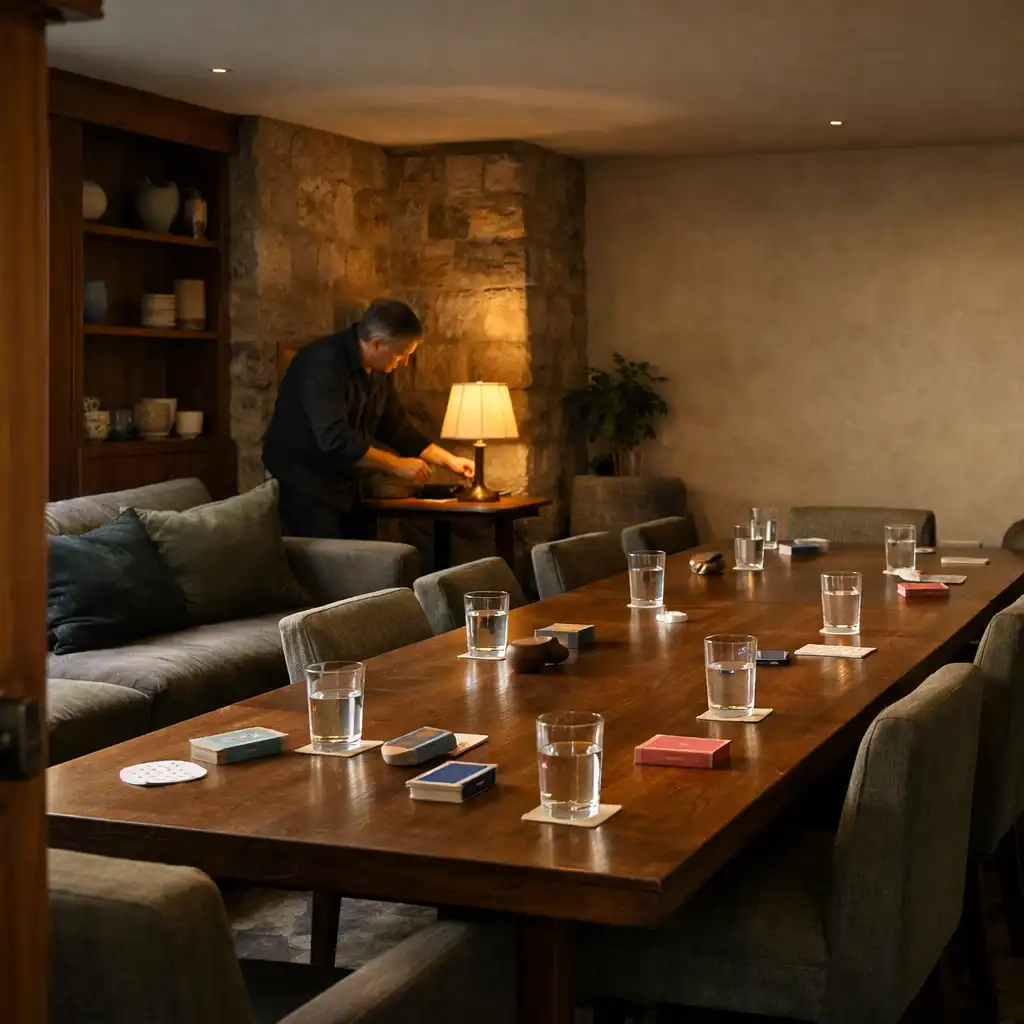
A lively shared table and a quieter nearby corner can belong to the same room. Guests may watch a table being set, move naturally between courses, or take a conversational pause at the lounge edge before returning to their place. That contrast helps a card room feel sociable rather than hurried.
Physical poker tables work best when they remain part of restaurant life: close enough for company, food and conversation, yet clear enough for everyone gathered in person to see the table. The pace can shift without the room losing its calm.
A considered table plan leaves the meal visible and the game easy to gather around in person, without making either one feel pushed aside.
Observed in person
Best 10 card-room moments
These are small, memorable points in a hosted meal-and-cards evening, not requirements every physical restaurant room must meet. Think of them as moments to notice: the first menu, a welcome, the sound of stories or the last course arriving while the table remains comfortably together.
-
01
Menus beside a freshly gathered deck
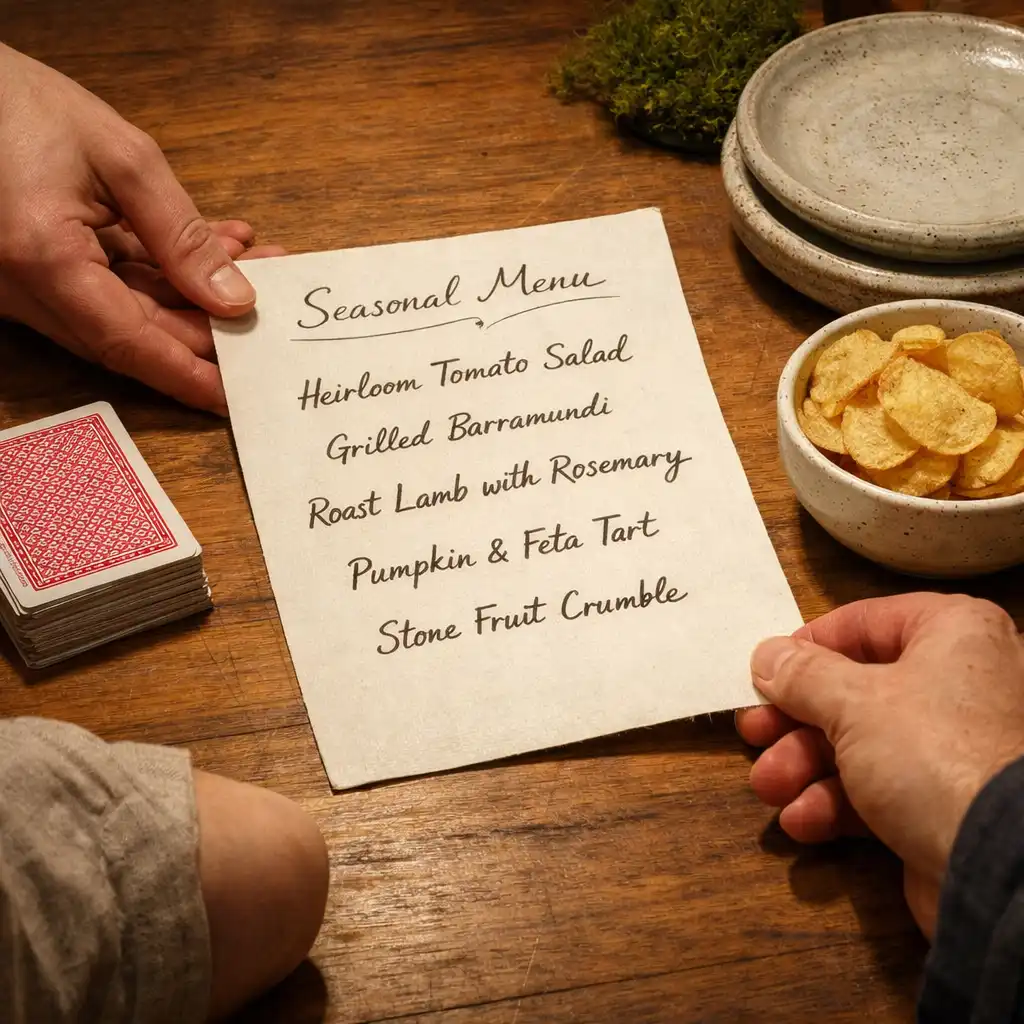
The first menu arrives as cards are being gathered and the table begins to find its rhythm. Seasonal choices become part of the physical scene, sitting beside water glasses and a deck rather than interrupting the conversation.
-
02
A welcome that makes room for everyone
A low-key host introduction can help unfamiliar guests settle in without turning the table into a formal occasion. It gives names, place and pace a simple beginning. Enough guidance, then room to be yourselves.
-
03
The easy pause between hands
A shared plate reaches the middle and the table pauses without losing its thread. Conversation continues around the cards, while the meal offers a natural reason to look up, pass something along and take the evening at an easier pace.
-
04
A poker table in the evening light
As evening light settles, a physical poker table can become the quiet centre of a restaurant room. Guests remain comfortable enough to read cards and faces, while the warm table light keeps the mood observant and close.
-
05
The chair just beyond the table
A chair at the lounge edge offers a softer way to join the room. Someone may pause there for a story, a course or a moment of listening before returning to the shared table and its in-person company.
-
06
A classic game after dinner
A familiar classic card game gives a mixed group a simple reason to linger after dinner. For related reading, explore Best 10 Classic Card Games as part of a considered, in-person evening.
-
07
Cards, timber and conversation
A hand passes a card across timber while glasses and plates stay in the same shared scene. It is a small tactile detail, but it makes the card room feel connected to the meal rather than set apart from it.
-
08
The table narrows into a gathering
At the end of a long table, a smaller group may draw closer and a meal begins to feel like a private-feeling gathering. Nothing needs to be promised; it is simply the warmth that can arise when people settle in together.
-
09
Stories that outlast the round
The room’s sound softens enough for stories to take over between card rounds. This is often the lasting part of a card lounge evening: the sense that conversation has found enough space to continue beyond the table’s immediate task.
-
10
The unhurried last course
The last course arrives and no one feels pressed to leave the table immediately. Dessert, conversation and another card round can each take their natural turn. It is a closing pace worth noticing.
-
06
Guidance without fuss
A table host who can introduce the room and then step back preserves ease. Gentle, in-person guidance can help a group understand where to settle, how the table is arranged and when the meal may naturally move on, without taking over the conversation.
-
07
Food that follows the table
Seasonal menu choices feel most useful when they can be shared or paced around a table without breaking the conversation. Rather than naming dishes, look for a meal rhythm that leaves room for people to stay present with one another and the cards.
-
08
Seats made for conversation
Physical lounge seating is at its best when guests can turn towards one another rather than facing a rigid line. A small angle, a clear view of the table and enough room to shift comfortably can make conversation feel more natural.
-
09
A surface that stays clear
Clear, uncluttered surfaces make a surprising difference in card lounges and around poker tables. There is room for cards, menus and glassware without turning the centre into a scramble. The practical observation is simple: a cared-for table is easier to share.
-
10
An ending that does not rush
An unforced finish gives dessert, conversation or another card round a chance to happen at a natural pace. It does not promise a table duration; it simply recognises the pleasure of a room that lets a gathering find its own close. Leave on the evening’s own cadence.
A practical next step
Plan the table, then the evening
Start by choosing the sort of room that suits your group: a communal table, a quieter card-lounge edge or a setting where the meal can unfold slowly. Consider the timing of dinner, how much conversation the group wants, and whether a physical card table belongs before or after a course.
Then organise an in-person visit through the site’s planning pathway. It can help to share group expectations before arriving, particularly when an evening includes food, a lounge setting and offline poker evenings as part of the same restaurant experience.
- Choose the room rhythm that feels right for the group.
- Think about meal timing before gathering around the table.
- Keep the plan grounded in an in-person evening together.
Dining companion
Let the meal set the tone
Food and cards can share the same social rhythm when the meal is given its own place in the evening. Use the site’s Top 10 dining notes and Top 10 Wine Pairings as a way to think about the meal before a card lounge gathering; no particular drink or menu choice is essential.
Keep the evening in the room
Choose a room that suits the group, arrive ready to share a meal, and enjoy cards together in person. Card lounges, card rooms and poker tables are most memorable as physical experiences shaped by company and a considered pace. Read the FAQPlan Your Visit when you are ready for the next useful note.